





Six million people spread across the world. Over 600 million dollars sent home in a single year (2024). And yet, most of them will never make the headlines. The Cameroonian diaspora has been building its power quietly, one business, one investment, one career at a time.
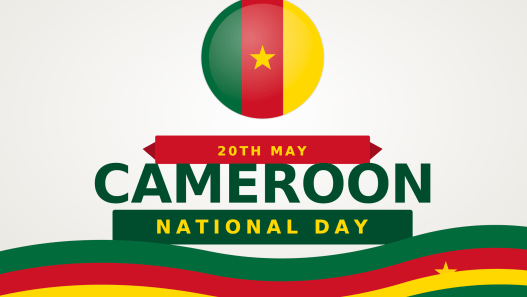
Every year on May 20th, Cameroon celebrates its national day. Flags go up in Yaounde and Douala, speeches are made, and the country pauses to take stock of itself. But a large part of what makes Cameroon relevant on the world stage today does not live within its borders. It lives in London, Paris, Montreal, Dubai and dozens of other cities where Cameroonian professionals have built careers, companies and networks that few people outside the community fully understand.
This is not a new story. Cameroonians have been leaving home to study and work abroad for decades. What is new is the scale of what they are building, and the growing awareness that their contribution goes far beyond the money they send back to their families. 
They are, quietly and collectively, becoming an economic force.

Working at the Top, From Every Continent
Walk into a major bank in London, a consulting firm in Paris, a tech company in Montreal or a trading business in Dubai, and there is a good chance you will find a Cameroonian somewhere in the room. Not as an entry-level employee, but as someone with real responsibility: a senior analyst, a managing partner, a founder, a researcher. The Cameroonian diaspora is widely considered one of the most educated among African communities abroad, and that reputation is earned.
Depending on where they settled, their contributions have taken different shapes.
Dubai: where Africa meets the world
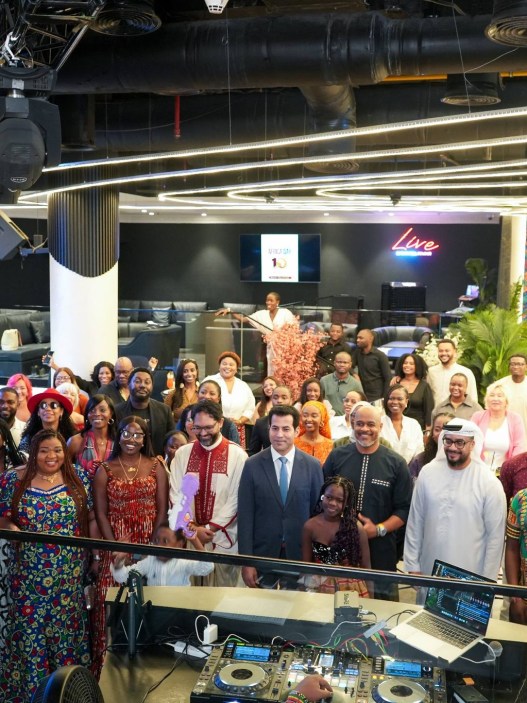
Dubai has become something of a crossroads for Cameroonian professionals and the scale of that presence is larger than most people realize. Thousands of Cameroonians now live and work across the GCC, concentrated in the UAE but with a growing footprint in Qatar, Saudi Arabia and Bahrain. They came for opportunity and they stayed because the city rewarded ambition. Dubai suits them well. It is international, fast-moving, logistically efficient, and it does not ask you to apologise for wanting to move quickly.
The majority are in trade and commerce. Many run import-export operations that connect Asia, the Gulf and Central Africa in a single logistics chain: sourcing from China, warehousing in Jebel Ali, shipping to Douala, Libreville or Bangui. Others have moved into real estate advisory, helping African investors — many of them from Cameroon, Gabon and Congo — navigate the UAE property market. A smaller but growing cohort is in financial services, corporate consulting and supply chain management, working for multinationals that use Dubai as their Africa and MENA regional hub.
What makes the GCC chapter of the diaspora story different is the pivot it enables. Professionals who spent their twenties building careers in Paris or London often arrive in Dubai in their thirties or forties with capital, connections and a different appetite for risk. The tax-free environment and the proximity to Africa — you can be in Douala in under six hours — turns the Gulf into something more than a destination. For many, it becomes an operating base: a place from which to run businesses that span three continents at once.
Profiles: Cameroonians building in the Gulf
Gides Kenda — Founder & CEO, NovaBridge International, Dubai / Hong Kong

Gides Kenda arrived in Dubai in 2017 and built from scratch. His first company, Saqar Al Bustan DCS, helped foreign investors — many of them African entrepreneurs — navigate the UAE’s company formation process. He followed that with Franklin Kenda Car Rental, a luxury vehicle operation serving high-net-worth clients in an intensely competitive market. Then he made a move that most would not have anticipated: he pivoted east, relocating to Hong Kong to position himself closer to manufacturing supply chains. Through NovaBridge International, he now operates a professional sourcing and logistics platform connecting Chinese suppliers with African importers, with offices in Hong Kong, Singapore and Cameroon. He leads around a hundred employees across several countries and is currently developing a financial inclusion product aimed at the continent’s unbanked populations. His trajectory traces the arc of the most ambitious Cameroonian entrepreneurs in the Gulf: use Dubai as a launch platform, then scale globally.
Mamadou Kwidjim Touré — Founder & CEO, Ubuntu Tribe, Dubai / Abu Dhabi

Born in Douala and educated in Europe — MSc in Finance from EDHEC, programmes at Harvard Kennedy School and MIT — Mamadou Kwidjim Touré spent two decades at the top of global finance. He worked at KPMG, BNP Paribas Investment Banking, the IFC and General Electric, where he led investments and project finance across sub-Saharan Africa totalling close to thirty billion dollars. Forbes named him one of the ten most influential men in Africa in 2014. The World Economic Forum designated him a Young Global Leader. None of that is the most interesting thing about him. What Touré has built in the Gulf — where he is a regular presence at Abu Dhabi Finance Week and Binance Blockchain Week Dubai — is Ubuntu Tribe, a platform that tokenizes gold, allowing people across Africa to access gold-backed digital assets from as little as a few cents. The idea is that Africa’s vast mineral wealth, historically extracted by others, can be converted into a tool for financial inclusion on the continent. He is also the founder of Africa 2.0, a pan-African civil society network present in 35 countries, and Ubuntu Group, an advisory and investment firm. Few figures in the Cameroonian diaspora operate at this level of institutional credibility and genuine innovation simultaneously.
FAI Derick — Co-founder & Chairman, Gulf-Africa Investment Nexus (GAIN), Dubai

FAI Derick belongs to a generation of Cameroonian leaders who are not waiting for institutions to catch up. Based between Douala and Dubai, he has built a portfolio of roles that would be exhausting to describe but are, in practice, deeply coherent: they all sit at the same intersection of Gulf capital and African opportunity. Since July 2025, he has served as Co-founder and Chairman of Gulf-Africa Investment Nexus, known as GAIN, a platform positioned at what he calls the “Gulf-Africa Deal Corridor” — working with sovereign funds, private equity houses and family offices to turn African investment interest into structured, bankable transactions. Alongside that, since June 2024, he has been Senior Property Consultant and Investment Advisor at OSAC Properties in Dubai, advising high-net-worth investors, including diaspora clients, on UAE real estate portfolio strategy. And since late 2025, he serves as Managing Director of Lantana Vision Group, a consultancy focused on market entry, transaction support and investment alignment across African markets. He also co-founded the Afro Heritage Foundation in 2022, a platform using digital storytelling to reconnect African children with their history and identity. What distinguishes him is the coherence underneath the portfolio: in each role, the mission is the same — make African opportunities legible to Gulf capital, and make Gulf capital accessible to African projects.
Three names, three different entry points into the Gulf. But the underlying logic is the same in each case: use the UAE as a platform, build credibility in a market that rewards speed and execution, then point that combination back toward Africa. The corridor is not yet built. But the Cameroonians building it are already in position.
Paris: the oldest hub, still going strong
Paris has the longest history as a home for Cameroonians abroad. The community there is deep, diverse and increasingly entrepreneurial. You still find a lot of professionals in banking, consulting and the public sector, but a younger generation is doing something different. They are using what they have earned and learned in France to invest back home, funding apartment blocks in Douala, backing small businesses in Yaounde, writing cheques for African startups. Paris, in that sense, is a pipeline as much as a destination.
London: finance, law and global reach
In London, the Cameroonian presence is concentrated in some of the most competitive fields there are: investment banking, business law, audit, corporate management. Some of them are working on transactions that involve African markets, which means their presence in these institutions is not just personally significant, it has a direct impact on how capital flows toward the continent. London is one of those places where being well-positioned really matters, and Cameroonians are well-positioned there.
Montreal: building for the future
Montreal attracts a different profile. Engineers, researchers, developers, people drawn to a city with a strong tech scene and a relatively accessible immigration path. Cameroonians there are working in artificial intelligence, health technology and digital services. Some are also building companies aimed at connecting Africa with the North American market. It is a younger, more tech-forward community, but it is developing fast.
The Money Coming Home
The numbers behind diaspora remittances are hard to ignore. According to World Bank data, money sent home by Cameroonians abroad grew from around 11 million US dollars in 1980 to 430 million in 2020 — an increase of more than 3,800 percent over forty years. In 2024, total transfers reached 603 million US dollars, representing 1.1 percent of GDP.
For a long time, most of that money went to cover basic needs: school fees, medical bills, food. And a lot of it still does. But there has been a clear shift. More and more of those funds are going toward real things that last.
- Real estate and housing projects
- Small business creation
- Startup investment
- Agriculture
- Commercial ventures
In Douala, Yaounde and Kribi, the mark of diaspora money is visible in the skyline. New apartment buildings, hotels, schools, sports facilities built to international standards. Figures like Francis Ngannou and Nchout Ajara are among the most visible examples of this dynamic but they are far from the only ones.
Five People Worth Knowing
The new generation of Cameroonian expatriates is not just climbing corporate ladders. They are building things. Platforms, companies, movements. Here are six names that tell part of that story.

Working between France and international markets, William has made a name for himself in artificial intelligence and drone technology. What makes him interesting is not just the technology itself, but how he thinks about it: he builds solutions designed for African realities, not imported ones. He is the kind of figure who makes you believe that Africa’s entry into the tech race is already underway.

Former head of the UN Economic Commission for Africa and a senior figure at the World Bank, Vera Songwe is one of the most influential economists on the continent, full stop. She sits at the table where decisions about Africa’s energy transition, G20 strategy and international investment are made. She does not just advise from the sidelines. She shapes the conversation.

Based in Johannesburg, Acha is Chairman of McKinsey’s Africa practice and co-founded both the African Leadership Academy and the African Leadership Network. He advises the people who run African businesses and governments, which means his influence is structural. He is not just successful himself. He is helping build the infrastructure for others to be successful too.
Founder of companies spanning drones, renewable energy and financial technology, Borel represents something important in the diaspora story: the entrepreneur who does not pick one sector but sees opportunity across all of them. His ambition is international from day one.

Through his platform Investir au Pays, Philippe has become one of the most recognised voices in the diaspora investment space. He reaches thousands of Afro-expats in Paris, Dubai and Montreal and helps them think seriously about putting money back into the continent. Part educator, part connector, entirely committed to the idea that diaspora capital can be transformative.

Founder of AppsTech and a board member across multiple international organisations, Rebecca has spent years advocating for Africa’s startup ecosystem from bases in Africa, the United States and Europe. She mentors founders, attracts investors and makes the case, consistently and credibly, that the continent is a serious destination for technology investment.
Culture Is Part of the Economy Too
It would be a mistake to look at this only through the lens of finance and business. The cultural dimension of the diaspora’s influence is real, and it is growing. Cameroonian food, music, fashion and digital content are finding audiences far beyond the community itself. Creators living abroad are turning their identity into something commercially viable: brand partnerships, consulting contracts, ambassador roles for international organisations.
Artists like Stanley Enow and Charlotte Dipanda have taken Cameroonian culture to audiences that had never heard of the country before. That kind of soft power has economic consequences. It opens doors. It changes perceptions. And it creates opportunities that are hard to quantify but impossible to ignore.
What Comes Next
The Cameroonian diaspora has built something real over the past few decades. But most observers would agree that it is still operating well below its potential. The pieces are there: the talent, the capital, the global connections. What is missing, in many cases, is the coordination.
Better cooperation between the diaspora and Cameroonian institutions would help. So would more trust, more structured networks, and a clearer sense of shared purpose. In the places where those things exist, the results speak for themselves.
Six million people. A billion dollars in motion. A generation that has learned to work across borders as naturally as breathing. The Cameroonian diaspora does not make a lot of noise. But it is building something, steadily and seriously, and the rest of the world is starting to notice.